
Moving from CPQ to Revenue Cloud is not a tech upgrade. For insurers, it is a shift in revenue strategy.
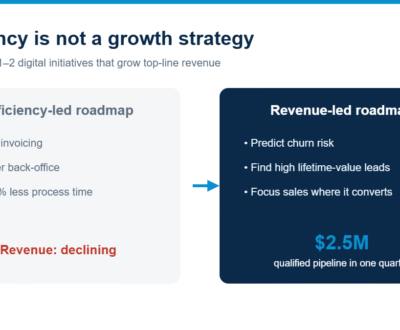
Most insurers have already optimised quoting in Salesforce. Quotes are faster, cleaner and more consistent. But here is the real question: are you optimising quotes, or optimising revenue?
The ceiling insurers hit
As portfolios grow, many organisations hit the same ceiling: pricing, billing and the policy lifecycle are not fully aligned. This creates friction — inconsistent renewals, complex adjustments, and difficulty tracking where value is captured across the lifecycle.
One lesson we see consistently: the biggest gains don’t come from adding more features or dashboards. They come from connecting decisions across the entire policy lifecycle.
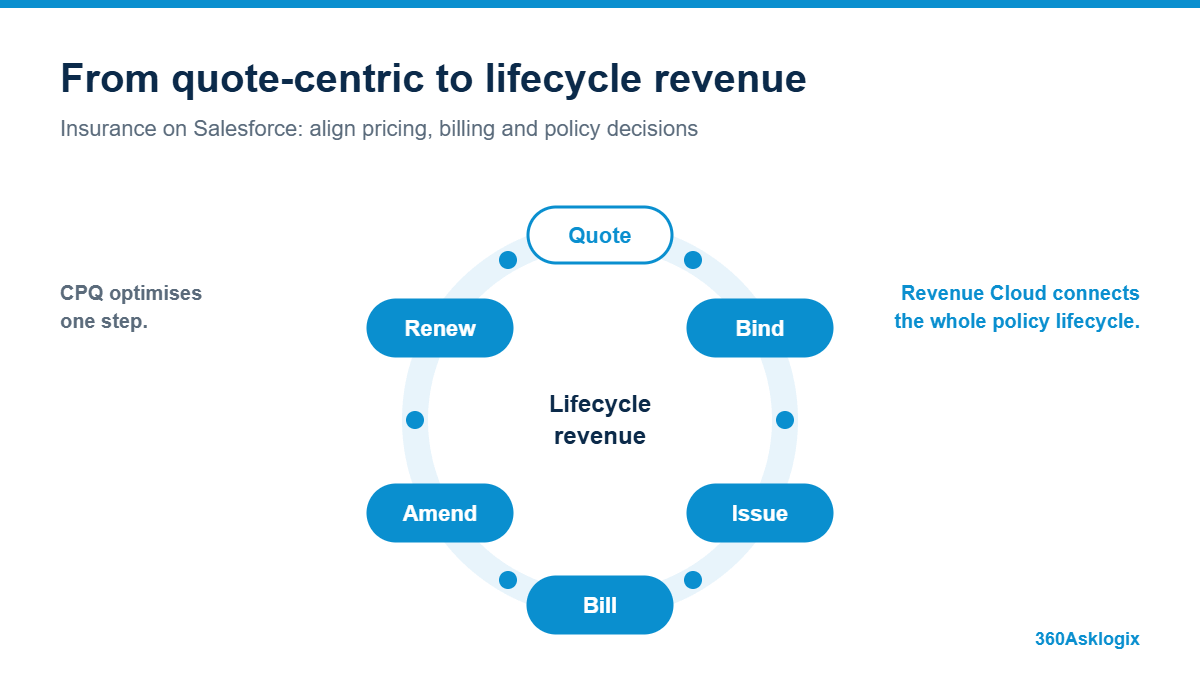
From quote-centric thinking to lifecycle revenue management
That means moving from quote-centric thinking to lifecycle revenue management:
quote → bind → issue → bill → amend → renew
That’s exactly the shift leading insurers are making with a Revenue Cloud approach on Salesforce. Not as a big-bang replacement, but by progressively aligning pricing, billing and policy decisions into one coherent flow.
Outcomes that typically stand out
- 10–15% improvement in revenue capture through better pricing consistency
- Reduced operational complexity across amendments and renewals
- Stronger control of margin and risk across the lifecycle
Takeaway
If you want to scale revenue without increasing risk, start with decisions across the lifecycle — not just the quote. Design your platform around how insurance operates, not just how it sells.
A contrarian view: a well-functioning CPQ can sometimes hide bigger lifecycle inefficiencies.
Where do you see the biggest friction today — policy changes, renewals, billing alignment or visibility on margin? Book a 30-minute call and we’ll look at it together. You can also read why we moved to Revenue Cloud ourselves: We Broke Up with CPQ (Kind Of).
Originally published on the 360Asklogix LinkedIn page.
About 360 Asklogix
360 Asklogix is a CRM software vendor, based on the Salesforce platform, designed for Financial Services.More articles
View all posts